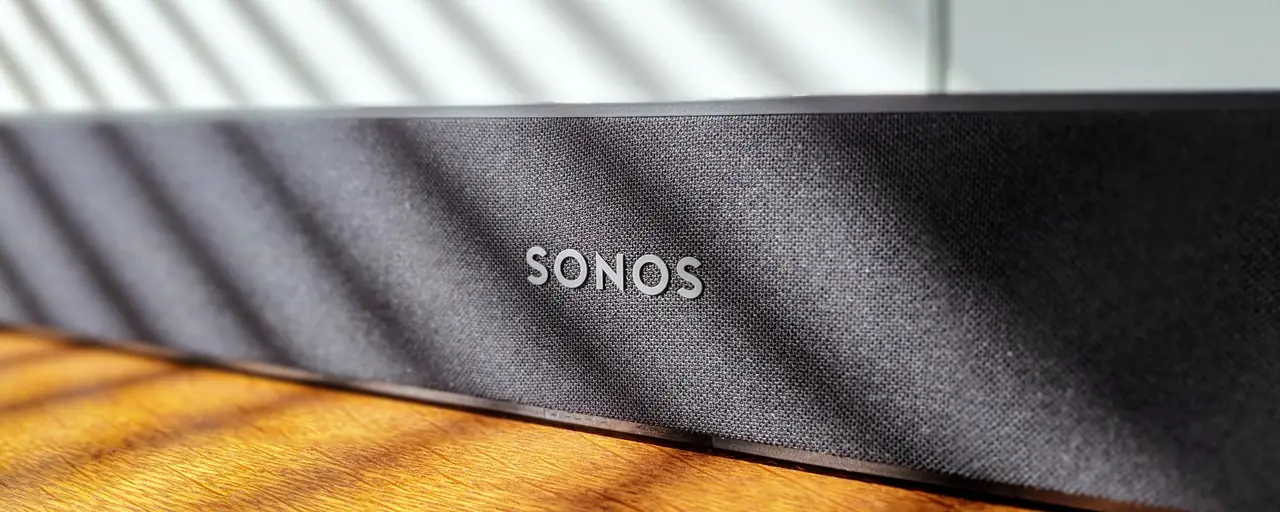

This article goes over the main features you should know about when choosing a soundbar for your TV. I also list My Recommended Soundbars below so you can choose the best soundbar within your price range.
If you want a soundbar with all the features and best audio quality, it's wise to get a higher-end soundbar. High-end soundbars can make a big difference when completing your home theater experience, but an entry-level and mid-range soundbars can still be much better than the speaker on a TV.
Surround Sound Formats

Soundbars can support multiple audio formats, but it also depends on the audio source for which audio format the soundbar will be using. There are four most common surround sound formats: Dolby Atmos, Dolby Digital, DTS, and DTS:X. You don't need to worry about your TV having support for these audio formats since only the soundbar and the audio source needs them. Below are the differences between each kind.
Dolby Digital: This widely-used format provides a higher bandwidth sound that handles five discrete audio channels for surround sound and a subwoofer channel.
DTS: A higher-quality alternative to Dolby Digital, with a higher bitrate and less compression.
Dolby Atmos: Gives a sense of height with dedicated upward-firing drivers to produce a realistic surround sound effect.
DTS:X: Has upward-firing drivers to produce height for realistic surround sound effects, similar to Dolby Atmos. DTS:X allows you to manually adjust individual sound objects for added flexibility, such as raising the volume of voices.
Audio Channels
When looking at soundbars, you'll notice the number of channels each has. Channels refer to the number of speakers the soundbar has. Having a soundbar with more channels can improve the range of audio and enrich the surround.
For example, for a 7.1.2-channel soundbar, the first number means the number of speakers. The second number is the number of subwoofers in the soundbar or externally. The last number indicates the number of upward-facing speakers which enhance the surround sound effect.
Bluetooth
Many soundbars have Bluetooth capability built-in so that you can connect your phone or other Bluetooth devices to the soundbar wirelessly. Bluetooth can be a great bonus to control the audio in your room easily.
Some TVs also support Bluetooth audio to wirelessly connect your TV's audio to a soundbar without an extra cable. While using Bluetooth makes a cleaner appearance, I recommend using either the HDMI or optical audio cable to achieve the best audio quality.
Subwoofer
You may also want to get a subwoofer to add additional bass for deeper-sounding audio. Standalone soundbars don't always come with a distinct bass sound and feel, so having the option to add a subwoofer can be a good choice.
If a soundbar doesn't support a subwoofer wirelessly or has a subwoofer included, make sure the soundbar has a subwoofer output if you plan to purchase one separately.
Wireless Surround Speakers
An additional option is to get wireless rear surround speakers. Wireless surround speakers are for adding a broader dimension to the audio when compared to a standalone soundbar. Many soundbars virtually create the surround sound effect, but physically having the additional speakers can enhance the experience.
If you use wireless speakers, the audio signal can reach the speakers wirelessly if supported. Wireless speakers can either be powered by a wire (for power only) or battery-powered, which can be recharged when needed. Having the wire or charging the speakers can be a downside for some people, but it is a good option for some room layouts or other situations.
Voice Enhancement
Some soundbars have voice enhancement features that can improve the audio clarity and volume of voices. Typically, this allows you to adjust the volume of the voices to your preference. This feature can be beneficial for people who have a hard time hearing voices or movies that have voices that blend in with other background audio.
Connecting the Soundbar
The easiest way to connect a soundbar to a TV is by using an optical audio cable. These fiber-optical cables connect the optical audio output on a TV to the optical input on the soundbar. The downside to using an optical connection is that it doesn't support Dolby Atmos or DTS:X.
For best audio quality, you can instead connect an HDMI cable from the soundbar to your TV's HDMI ARC/eARC output to transmit the audio from your TV.
Keep in mind that you may have to adjust the audio settings on your TV for the soundbar to work correctly in either case.
HDMI Pass-Through
If the soundbar supports HDMI video pass-through, you can connect your devices (blu-ray, cable box, or game console) directly to the soundbar via an ARC/eARC-supported HDMI cable. The cable will pass through the video to your TV while decoding the audio on your soundbar.
Video pass-through is a good option if a surround-sound soundbar has this functionality since they usually have surround-sound decoding built-in for better quality audio. When using HDMI ARC, it's expected that you'll be able to control your soundbar volume with your TV remote.
My Recommended Soundbars
Entry-Level Soundbars
Bose Model 838309-1100 TV Soundbar
Bose Model 838309-1100 TV Soundbar Driver Count: 3 Optical Input: YES HDMI Input: YES Wireless: Bluetooth The Bose model 838309-1100 soundbar features a compact design with two angled full-range drivers and a center tweeter that enhances speech clarity for improved dialogue.
This soundbar supports Bluetooth, HDMI, and optical audio connections with built-in Dolby decoding. The voice enhancement features and multiple connectivity options provide excellent flexibility and accessibility.
Yamaha SR-C20A Sound Bar
YAMAHA SR-C20A Sound Bar Driver Count: 3 Optical Input: YES HDMI Input: YES Wireless: Bluetooth The Yamaha SR-C20A soundbar delivers impressive audio with its built-in subwoofer and virtual surround sound technology, producing rich, powerful sound despite its slim 23-inch design.
This soundbar supports both Dolby Digital and features Clear Voice technology for enhanced dialogue clarity. It offers versatile connectivity through HDMI ARC, Bluetooth, optical audio, and 3.5mm aux input.
The included Sound Bar Remote app allows smartphone control via Bluetooth, and the soundbar includes wall-mount keyhole slots for flexible placement options.
VIZIO M-Series 2.1 Channel Sound Bar
VIZIO M-Series 2.1 Channel Sound Bar Driver Count: 6 Optical Input: YES HDMI Input: YES Wireless: Bluetooth The Vizio M-Series 2.1 all-in-one soundbar packs six speakers with separate tweeters and woofers, plus dual 3-inch built-in subwoofers for impressive bass without requiring an external subwoofer.
It supports Dolby Atmos and DTS:X for immersive, three-dimensional audio with virtual surround sound that places audio above and around you.
The soundbar offers multiple connection options including HDMI eARC, Bluetooth, and optical audio, with support for 4K HDR and Dolby Vision pass-through. Its space-saving design at just over two inches tall fits seamlessly into any room.
Bose TV Speaker Soundbar
Bose TV Speaker Soundbar Driver Count: 2 Optical Input: YES HDMI Input: YES Wireless: Bluetooth The Bose TV Speaker Soundbar delivers clear dialogue and wide spatial sound with two angled full-range drivers. Built-in Dolby decoding provides enhanced audio capabilities for a more realistic listening experience.
This soundbar supports HDMI-CEC for automatic power-on when connected to compatible TVs and is Roku TV Ready certified for seamless integration. It offers HDMI ARC, Bluetooth, and optical audio connectivity with optional Dialogue Mode and bass boost features.
Mid-Range Soundbars
Polk Audio Signa S4 Sound Bar
Polk Audio Signa S4 Sound Bar Driver Count: 7 Optical Input: YES HDMI Input: YES Wireless: Bluetooth The Polk Audio Signa S4 soundbar features a 7-driver array including two midrange drivers, two tweeters, a dedicated full-range center channel, and two up-firing drivers for overhead Dolby Atmos effects.
This Dolby Atmos 3.1.2 certified soundbar includes a wireless 5.9-inch subwoofer for powerful bass. Polk's patented VoiceAdjust technology allows independent dialogue volume control, while BassAdjust controls both soundbar and subwoofer bass levels simultaneously.
The soundbar supports HDMI eARC, Bluetooth, optical audio, and 3.5mm aux input with compatibility for 8K TV video pass-through. Night Mode reduces bass and enhances dialogue without raising overall volume.
Sonos Arc Smart Soundbar
Sonos Arc Smart Soundbar Driver Count: 11 Optical Input: NO (need adapter) HDMI Input: YES Wireless: WiFi The Sonos Arc Smart soundbar features eleven precisely engineered internal speakers, including two dedicated upward-firing height channels, creating a 5.1.2 Dolby Atmos experience with multidimensional spatial audio.
Fine-tuned by Oscar-winning sound engineers, the Arc delivers crystal-clear dialogue with optional Speech Enhancement. Trueplay tuning technology uses iOS devices to analyze room acoustics and optimize EQ for precise sound placement.
The soundbar supports HDMI eARC, Wi-Fi, AirPlay 2, and requires an adapter for optical audio connections. It integrates seamlessly with the Sonos ecosystem for multi-room audio and automatic TV audio switching.
Sony HTX8500 2.1-Channel Soundbar
Sony HTX8500 2.1-Channel Soundbar Driver Count: 3 Optical Input: YES HDMI Input: YES Wireless: Bluetooth The Sony HTX8500 soundbar delivers a 2.1 channel system with built-in dual subwoofers and Vertical Sound Engine technology that transforms stereo audio into simulated 7.1.2 channel surround sound.
This soundbar supports Dolby Atmos and DTS:X with five dedicated sound modes: Theater, Game, Sports, Music, and News. The compact design measures just 890mm wide and 64mm tall.
It features HDMI eARC, Bluetooth, and optical audio connectivity with 4K HDR pass-through supporting 18Gbps bandwidth, HDCP 2.2/2.3, and both HDR10 and Dolby Vision compatibility.
Sennheiser Ambeo Soundbar Mini
Sennheiser Ambeo Soundbar Mini Driver Count: 6 Optical Input: NO HDMI Input: YES Wireless: WiFi, Bluetooth The Sennheiser Ambeo Soundbar Mini packs a six-driver array (four 40mm full-range plus two 4-inch upward-firing cellulose-cone woofers) into a compact 700mm cabinet, using AMBEO virtualization to reproduce a 7.1.4 spatial soundstage without physical surround speakers.
It supports Dolby Atmos, DTS:X, MPEG-H, and Sony 360 Reality Audio over HDMI eARC. There is no optical input or HDMI passthrough, so all sources route through the TV's eARC port.
Wireless connectivity covers Wi-Fi 6 (2x2 MIMO dual-band), Bluetooth 5.0, AirPlay 2, Chromecast built-in, Spotify Connect, and Tidal Connect, with Alexa built-in for hands-free control. Reaches a claimed 43Hz low-end without an external sub.
Polk Audio MagniFi Max AX Sound Bar
Polk Audio MagniFi Max AX Sound Bar Driver Count: 11 Optical Input: YES HDMI Input: YES Wireless: WiFi, Bluetooth The Polk MagniFi Max AX is a 5.1.2-channel Dolby Atmos / DTS:X soundbar with an 11-driver array including upward-firing height drivers, paired with a wireless 10-inch down-firing subwoofer. Polk's SDA technology widens the stereo image, and VoiceAdjust independently raises dialogue volume.
Connectivity includes three HDMI 4K inputs, one HDMI eARC output, an optical Toslink input, and USB. HDR10 and Dolby Vision passthrough are supported at 4K/60Hz.
Wireless streaming supports Wi-Fi (Apple AirPlay 2, Google Chromecast, Spotify Connect, Works with Alexa) and Bluetooth. The system can be expanded with the SR2 Wireless Rear Surround Speakers (matching the SR variant's 7.1.2 configuration).
High-End Soundbars
Sony HT-A5000 5.1.2-Channel Sound Bar
Sony HT-A5000 5.1.2-Channel Sound Bar Driver Count: 9 Optical Input: YES HDMI Input: YES Wireless: WiFi, Bluetooth The Sony HT-A5000 5.1.2-channel soundbar delivers powerful surround sound with support for Dolby Atmos and DTS:X. It can be expanded with optional wireless subwoofer and rear speakers for complete home theater immersion.
This soundbar features HDMI 2.1 pass-through supporting VRR and ALLM for gaming, along with 8K/60Hz and 4K/120Hz video with Dolby Vision compatibility. The broad soundstage and robust low-end provide impressive single-box performance.
Multiple connectivity options include HDMI eARC, Bluetooth 5.0, optical audio, AirPlay 2, Chromecast, and Spotify Connect. The comprehensive wireless capabilities and 8K video pass-through make it highly versatile.
SAMSUNG HW-Q950A 11.1.4-Channel Soundbar
SAMSUNG HW-Q950A 11.1.4-Channel Soundbar Driver Count: 22 Optical Input: YES HDMI Input: YES Wireless: WiFi, Bluetooth The Samsung HW-Q950A 11.1.4-channel soundbar delivers true three-dimensional audio with 22 speakers across the main bar, wireless subwoofer, and included rear speakers. The four up-firing channels create realistic overhead effects for complete immersion.
This soundbar supports Dolby Atmos, Dolby Digital, DTS, and DTS:X with Auto EQ room correction and Q-Symphony technology for synchronized audio with compatible Samsung TVs.
Connectivity includes HDMI eARC, Bluetooth, AirPlay 2, optical audio, and Alexa built-in voice assistant. It supports 4K video pass-through and offers SpaceFit Sound+ auto calibration for optimized room acoustics.
Sony HT-A7000 7.1.2ch 500W Dolby Atmos Sound Bar
Sony HT-A7000 7.1.2ch 500W Dolby Atmos Sound Bar Driver Count: 11 Optical Input: YES HDMI Input: YES Wireless: WiFi, Bluetooth The Sony HT-A7000 7.1.2-channel soundbar features Vertical Sound Engine and S-Force Pro Front Surround technology that converts stereo audio into expansive surround sound with impressive overhead height effects.
This 500-watt soundbar supports Dolby Atmos and DTS:X with 360 Spatial Sound Mapping when paired with optional Sony speakers. The premium build quality and powerful drivers deliver superior soundstage performance compared to the HT-A5000.
It offers HDMI 2.1 eARC with VRR and ALLM support for gaming, Bluetooth, optical audio, AirPlay 2, Chromecast, and Spotify Connect. Compatible with 8K/60Hz and 4K/120Hz video pass-through with Dolby Vision.
Sonos Arc Ultra Smart Soundbar
Sonos Arc Ultra Smart Soundbar Driver Count: 14 Optical Input: NO (need adapter) HDMI Input: YES Wireless: WiFi, Bluetooth The Sonos Arc Ultra is a 9.1.4 Dolby Atmos soundbar driven by 14 Sonos-engineered drivers and 15 Class-D amplifiers, with two physical upward-firing speakers for height channels. The new Sound Motion woofer uses a four-motor dual-membrane design for deeper bass in a slimmer cabinet than the original Arc.
Connectivity is one HDMI eARC output (no HDMI inputs); optical requires the Sonos optical adapter sold separately. Bluetooth 5.3 is added in this generation, and Trueplay calibration now works on Android in addition to iOS.
Wi-Fi 6 connects to the Sonos ecosystem with AirPlay 2, Spotify Connect, Sonos Voice Control, and Amazon Alexa support. Includes an Ethernet port for wired networking.
Samsung HW-Q990F 11.1.4-Channel Soundbar
Samsung HW-Q990F 11.1.4-Channel Soundbar Driver Count: 23 Optical Input: YES HDMI Input: YES Wireless: WiFi, Bluetooth Samsung's 2025 flagship is an 11.1.4-channel system with 23 drivers across the main bar, a redesigned cube-shaped wireless subwoofer with dual opposing 8-inch active drivers, and two wireless rear speakers. Supports Dolby Atmos and DTS:X.
HDMI loop-through provides two HDMI 2.1 inputs and one HDMI eARC output, both inputs supporting 4K/120Hz with VRR/ALLM and Dolby Vision passthrough. An optical SPDIF input is included for legacy connections.
Wireless features include Wi-Fi, Bluetooth 5.3, AirPlay 2, Chromecast, Spotify Connect, Tidal Connect, Roon Ready, and Wireless Dolby Atmos for compatible 2022-2025 Samsung TVs. Q-Symphony lets the soundbar play in sync with the TV's speakers.
Bose Smart Ultra Soundbar
Bose Smart Ultra Soundbar Driver Count: 9 Optical Input: YES HDMI Input: YES Wireless: WiFi, Bluetooth The Bose Smart Ultra Soundbar uses nine drivers in a 5.1.2 configuration with two upward-firing dipole speakers and a center tweeter, plus Bose PhaseGuide arrays that beam audio sideways to widen the soundstage and create phantom surround channels.
A.I. Dialogue Mode uses machine learning to lift speech clarity, while ADAPTiQ room calibration tunes the soundbar to the listening room. Supports Dolby Atmos via HDMI eARC.
Physical connections include one HDMI eARC port, an optical input, Ethernet, USB (service), and 3.5mm jacks for an IR blaster and the ADAPTiQ headset. Wireless streaming includes Wi-Fi, Bluetooth 5.0, AirPlay 2, Chromecast, and Spotify Connect, with Alexa built-in.
Sony BRAVIA Theater Bar 9 (HT-A9000)
Sony BRAVIA Theater Bar 9 (HT-A9000) Driver Count: 13 Optical Input: NO HDMI Input: YES Wireless: WiFi, Bluetooth Sony's 2024 flagship single-bar soundbar packs 13 X-Balanced drivers in a 5.0.2 layout (front, center, side, and up-firing channels) producing 585W. Sony's 360 Spatial Sound Mapping creates phantom surround speakers and works with optional wireless rears (SA-RS3R/RS5) and subwoofers (SA-SW3/SW5) for up to 7.1.4 expansion.
HDMI 2.1 with one input and one HDMI eARC output supports 8K/60Hz, 4K/120Hz, VRR, ALLM, SBTM, and Dolby Vision passthrough. There is no optical input on this model.
Bluetooth 5.2 with LDAC streaming, Wi-Fi (802.11ac) with Apple AirPlay 2, Spotify Connect, Tidal Connect, and Chromecast. Pairs with BRAVIA TVs via Acoustic Center Sync and BRAVIA Connect calibration.
Sony BRAVIA Theater Bar 8 (HT-A8000)
Sony BRAVIA Theater Bar 8 (HT-A8000) Driver Count: 11 Optical Input: NO HDMI Input: YES Wireless: WiFi, Bluetooth The 2024 step-down to the Theater Bar 9 features 11 drivers in a 5.0.2 Dolby Atmos / DTS:X layout (stereo fronts, dedicated center, side-firing surrounds, and height channels) producing 495W. Expandable to 7.1.4 with optional wireless subwoofer and rear speakers.
HDMI 2.1 input and HDMI eARC output support 8K/60Hz, 4K/120Hz, HDR10, Dolby Vision, HLG, VRR, ALLM, and SBTM. No optical input.
Bluetooth 5.2 with LDAC, Wi-Fi (802.11ac), Apple AirPlay 2, Spotify Connect, Tidal Connect, and Chromecast. Acoustic Center Sync uses S-Center Out to combine the soundbar with a compatible BRAVIA TV's speakers for stronger center-channel dialogue.
LG S95TR 9.1.5-Channel Soundbar
LG S95TR 9.1.5-Channel Soundbar Driver Count: 17 Optical Input: YES HDMI Input: YES Wireless: WiFi, Bluetooth LG's 2024 flagship 9.1.5-channel system delivers 810W across 17 drivers spanning the main soundbar, wireless subwoofer, and two wireless rear speakers, with five up-firing channels including an industry-exclusive up-firing center for dialogue clarity.
Two HDMI ports (one eARC) support 4K/120Hz HDR10 passthrough with VRR and ALLM, plus an optical input and a USB port. Game Mode Pro reduces audio latency over HDMI for fast-paced gameplay.
Wireless support includes Wi-Fi, Bluetooth 5.1, Apple AirPlay 2, Spotify Connect, and Chromecast. WOW Orchestra syncs the soundbar with compatible LG TV speakers, and the optional WOWCAST dongle enables wireless lossless multi-channel audio between the soundbar and 2024+ LG TVs (B4/C4/G4 and later).
Sennheiser Ambeo Soundbar Plus
Sennheiser Ambeo Soundbar Plus Driver Count: 9 Optical Input: YES HDMI Input: YES Wireless: WiFi, Bluetooth The Ambeo Soundbar Plus is a 9-driver, 400W virtual 7.1.4 Dolby Atmos / DTS:X / Sony 360 Reality Audio soundbar using AMBEO virtualization with two side, three front, and two up-firing 2-inch full-range drivers plus dual 4-inch long-throw woofers reaching down to 38Hz.
Wired connections include two HDMI 2.0 inputs, one HDMI 2.1 eARC output, an optical input, stereo RCA, a sub pre-out for the optional Ambeo Sub, and Ethernet.
Wi-Fi 6 (2x2 MIMO), Bluetooth 5.0, Apple AirPlay 2, Chromecast built-in, Spotify Connect, and Tidal Connect (with Dolby Atmos Music). Alexa built-in plus integration with Google Home and Apple HomeKit. Includes automatic room calibration through the Smart Control app.
Learn More About TVs
Want to learn more about TVs? Check out the articles in my TV series:
- Best TV Display Types
- TV Resolution Explained - 8K UHD vs. 4K vs. QHD vs. FHD
- Choosing the Best TV for Your Room
- Best TV for Playing PlayStation 5 Games
- What Type of TV Is Best for Gaming?
- Ultimate Guide to Samsung QLED TVs
- Best Type of TV for Bright Rooms
- What Type of TV Has the Best Refresh Rate & Response Time?
- What Type of TV Has the Best Viewing Angle?
- Do LED TVs Have Backlight Bleed?
- How to choose the best soundbar for your TV