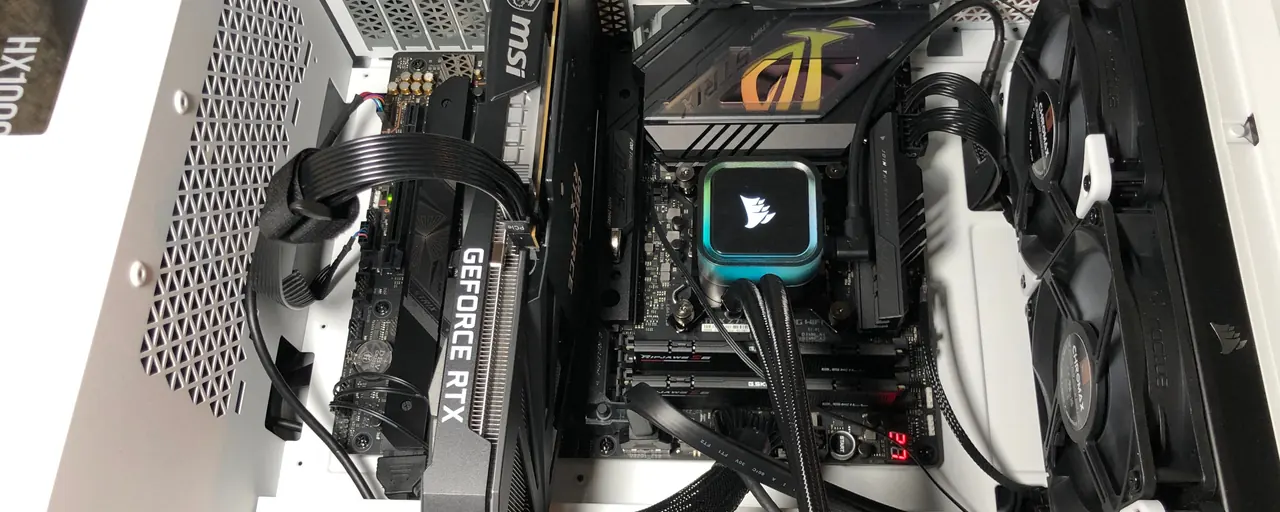

Motherboard Requirements for the Core i9-14900KF Processor

For Intel's 14th generation Core i9-14900KF processor, you'll need a motherboard with an LGA 1700 socket and a compatible 700-series or 600-series chipset. However, 600-series chipsets were designed for the 12th generations Core processors and may limit the capabilities of your system.
Motherboards for Intel processors are made with chipsets provided by Intel. Each chipset offers a unique set of capabilities. However, motherboards must explicitly support features and capabilities for you to use them. Verify that a motherboard supports the features and capabilities you desire.
The "K" in the model name 14900KF means it's an unlocked processor that supports overclocking. You will need a motherboard with overclocking support to overclock this CPU. Motherboards with the Z690 or Z790 chipsets typically support CPU overclocking. If you don't want to use the overclocking functionality at this time, you can use a motherboard with Intel's other 700-series or 600-series desktop chipsets (e.g., H770, B760, H670, B660, H610).
The W680 and Q670 chipsets are intended for workstation and business use cases; their availability in stand-alone motherboards is limited.
To use 13th Gen Intel Core CPUs with the 600-series chipsets, you'll need an updated BIOS. You either need to purchase one with an updated BIOS, perform the update with a 12th Gen CPU installed, or use the USB BIOS Flashback feature (if available).
Products that ship with a compatible BIOS are typically marked as "Ready" for 13th Gen Intel processors.
For a detailed comparison of these chipsets, check out my article Which Chipsets Work With Intel's Core i9-14900KF CPU? .
Check out out Recommended Motherboards for the 14th Gen 14900KF below.
Other Considerations When Choosing a 14900KF Motherboard
When choosing a motherboard for the 14900KF, we considered several key factors beyond socket type and chipset compatibility. These include form factor, expandability, power delivery, and features like USB ports, audio quality, and Wi-Fi support. By focusing on these elements, you can identify what matters most for your specific needs and ensure an optimal, future-proof setup.
Memory Overclocking
To overclock DDR memory via an XMP profile, your motherboard chipset must support memory overclocking.
Find which chipsets support overclocking in our article, Which Chipsets Work With Intel's Core i9-14900KF CPU?.
Video Output Port
The "F" in the 14900KF model name indicates the CPU lacks integrated graphics and requires a separate graphics card. Since there's no integrated graphics support, you won't need a motherboard with a video output port (e.g., HDMI).
Storage: M.2 Slots and SATA Ports
NVMe M.2 cards are the latest and fastest SSD storage form. We recommend ensuring your motherboard includes enough slots for your needs.
The Z790, H770, Z690, and H670 chipsets support the most PCIe 4.0 lanes, meaning motherboards with these chipsets typically offer the most x4 NVMe M.2 slots.
Learn more about storage types in our article Storage Type Comparison: M.2, U.2, NVMe, SATA, SSDs, HDDs.
Connectivity
USB
Ensure the motherboard provides enough USB ports at your desired speeds. The Z790, H770, Z690, and H670 support the most USB ports for the 14900KF at USB 3.2 2x2 (20 Gbps), USB 3.2 2x1 (10 Gbps), and USB 3.2 1x1 (5 Gbps) speeds.
High-bandwidth devices typically fall into two categories: storage devices and high-resolution video equipment. These devices depend on high-speed data transfer for optimal performance. In our testing, we've encountered instances where insufficient bandwidth significantly impeded performance, particularly when working with large data transfers and high-resolution video editing.
Audio
When choosing a motherboard, prioritize one with physical audio ports if sound quality matters to you. Look for color-coded 3.5mm jacks (green for front speakers, black for rear, orange for center/
If you're using a soundbar or AV receiver, we recommend selecting a motherboard with an optical (S/PDIF) port. It provides cleaner audio by avoiding electrical noise, which makes a noticeable difference in sound quality.
While built-in audio quality isn't the most critical factor, choose a motherboard with a high-quality audio codec if you're using high-end headphones. It can reduce background noise, especially at higher volumes. If the motherboard's audio doesn't meet your standards, consider an external audio solution like a USB DAC as a reliable backup. It's an affordable way to bypass onboard limitations and improve sound quality for both desktops and laptops.
Choose a motherboard whose ports are compatible with your current equipment to avoid costly upgrades in the future.
Form Factor
When it comes to motherboards, we've encountered three primary form factors. In our experience, ATX stands out as the most common for desktop PCs. We've also explored Mini-ITX and MicroATX for building mini-PCs, and found they typically offer fewer PCIe slots, RAM slots, and storage support.
We've observed that these smaller form factors are backward compatible with standard ATX cases, using a subset of their mounting holes. In fact, we've frequently used Mini-ITX motherboards in ATX cases.
One crucial consideration is ensuring your case matches your motherboard's form factor. We've learned from experience how important it is to choose a case that aligns with your motherboard's specific needs.
PCIe Expansion Slots
The Z790, H770, Z690, and H670 chipsets provide the most flexibility when paired with the 14900KF, allowing multiple PCIe 5.0 graphics cards in dual x8 configuration.
The H610 chipset, however, is very limited with only a single PCIe 5.0 x16 slot.
Recommended Motherboards for the 14th Gen 14900KF
DDR5 Motherboard: MSI MAG B760 Tomahawk WiFi
We recommend the MSI MAG B760 Tomahawk WiFi (DDR5) for a 14900KF build needing three NVMe drives, 2.5 Gbps Ethernet, and Wi-Fi 6E. It uses an ATX case and DDR5 memory. Choose a DDR4 motherboard instead to reuse DDR4 memory.
- Check the latest price of the MSI MAG B760 Tomahawk WiFi DDR5 on Amazon

- Check the latest price of the MSI MAG B760 Tomahawk WiFi DDR5 on Amazon
MSI MAG B760 Tomahawk WiFi (DDR5) Graphics PCIe Version: 5.0 x16 Memory: 4 DDR5 DIMM slots NVMe slots: 3 (Gen 4 x4) SATA ports: 4 Ethernet: 2.5 Gbps The three PCIe 4.0 x4 M.2 slots suit a system with separate OS, game, and work drives. A rear USB 20 Gbps Type-C port supports fast external storage. Choose a five-M.2 Z-series board below if you need more internal NVMe drives.
B760 supports RAM overclocking, but not CPU multiplier overclocking. Choose a Z-series board if you plan to overclock the 14900KF CPU multiplier; the B760 remains an option for running this CPU without multiplier overclocking.
MSI lists the 14900KF with BIOS 7D96vA5 or newer in its DDR5-model CPU support list. Confirm the installed version with the seller before ordering, and use MSI's current stable BIOS during setup.
Thunderbolt 4 and Dual-Ethernet Motherboard: MSI MEG Z790 ACE Gaming
Our recommended feature-rich motherboard to pair with the Core i9-14900KF is the MSI MEG Z790 ACE Gaming.
- Check the latest price of the MSI MEG Z790 ACE Gaming Motherboard on Amazon
- Check the latest price of the MSI MEG Z790 ACE Gaming Motherboard on Amazon
MSI MEG Z790 ACE Gaming Max PCIe Version: 5.0 Max RAM: 128 GB DDR5 NVMe slots: 5 Ethernet: 2 x 2.5 Gbps The MSI MEG Z790 ACE Gaming is our option for a build needing Thunderbolt 4 (40 Gbps) and two 2.5 Gbps Ethernet ports. Its Z790 chipset supports CPU multiplier overclocking with unlocked CPUs, and the board supports DDR5 memory. Its 277 x 304.8 mm E-ATX size requires a case with clearance for that board width.
Its two wired network ports suit a PC connecting to two separate networks, while Wi-Fi 6E and Bluetooth 5.3
support wireless networking and peripherals.We also appreciated the plentiful storage options with the MSI MEG Z790 ACE Gaming. It features five x4 NVMe M.2 slots
, allowing for efficient storage and quick access to your games, applications, and media. Its USB 3.2 Gen 2x2 slots also offers 20 Gbps USB speeds.Choose the ACE for its dual Ethernet ports, Thunderbolt 4, and five NVMe slots. A three-drive B760 board is an alternative if you do not need those connections or CPU multiplier overclocking.
Five-Drive ATX Motherboard: ASUS ROG Strix Z790-E Gaming WiFi 6E
Our recommended five-drive ATX motherboard to pair with the Core i9-14900KF is the ASUS ROG Strix Z790-E Gaming WiFi 6E.
- Check the latest price of the ASUS ROG Strix Z790-E Gaming WiFi 6E on Amazon
- Check the latest price of the ASUS ROG Strix Z790-E Gaming WiFi 6E on Amazon
ASUS ROG Strix Z790-E Gaming WiFi 6E Max PCIe Version: 5.0 Max RAM: 128 GB DDR5 NVMe slots: 5 Ethernet: 2.5 Gbps The ASUS ROG Strix Z790-E Gaming WiFi 6E is an ATX option for a build needing five NVMe slots. Its Z790 chipset supports CPU multiplier overclocking with unlocked CPUs, and the board uses DDR5 memory.
We found that the ASUS ROG Strix Z790-E Gaming WiFi 6E motherboard offered superior connectivity as well. Its 2.5 Gbps Ethernet port enables speedy file transfers, surpassing typical home internet speeds. Wi-Fi 6E technology provides fast wireless connections, making online gaming and streaming seamless. Plus, Bluetooth 5.3
support allows convenient music streaming to Bluetooth headphones.It features five NVMe M.2 slots
and USB 20 Gbps connectivity. Installing an SSD in M.2_1 reduces the main PCIEX16(G5) graphics slot to x8. If you want the graphics slot to retain x16, use the other four M.2 slots and leave M.2_1 empty.Choose the Z790-E for five-drive expansion in an ATX case, accounting for that graphics-lane sharing. The ACE adds a second Ethernet port and Thunderbolt 4 but needs E-ATX case clearance.
DDR4 Reuse Motherboard: MSI MAG B760 Tomahawk WiFi DDR4
Our recommended DDR4 reuse motherboard to pair with the Core i9-14900KF is the MSI MAG B760 Tomahawk WiFi DDR4.
- Check the latest price of the MSI MAG B760 Tomahawk WiFi DDR4 on Amazon
- Check the latest price of the MSI MAG B760 Tomahawk WiFi DDR4 on Amazon
MSI MAG B760 Tomahawk WiFi DDR4 Max PCIe Version: 5.0 Max RAM: 128 GB DDR4 NVMe slots: 3 Ethernet: 2.5 Gbps Through our analysis and research, we found that the MSI MAG B760 Tomahawk WiFi DDR4 motherboard offers an impressive range of features designed to enhance your gaming experience. Its PCIe 5.0 graphics slot supports compatible graphics cards. The motherboard's support for up to 128 GB of DDR4 memory ensures smooth multitasking and responsive performance at a lower price than DDR5. This motherboard has the B760 chipset.
We found that the MSI MAG B760 Tomahawk WiFi DDR4 motherboard offered superior connectivity as well. Its 2.5 Gbps Ethernet port enables speedy file transfers, surpassing typical home internet speeds. Wi-Fi 6E technology provides fast wireless connections, making online gaming and streaming seamless. Plus, Bluetooth 5.3
support allows convenient music streaming to Bluetooth headphones.We also appreciated the plentiful storage options with the MSI MAG B760 Tomahawk WiFi DDR4. It features three x4 NVMe M.2 slots
, allowing for efficient storage and quick access to your games, applications, and media. Its USB 3.2 Gen 2x2 slots also offers 20 Gbps USB speeds.Choose the DDR4 version when reusing compatible DDR4 memory. It offers three NVMe slots, Wi-Fi 6E, and 2.5 Gbps Ethernet; choose the separate DDR5 model for a DDR5 build. B760 does not support CPU multiplier overclocking.
Learn More About the Intel Core i9-14900KF
- Motherboard: Choosing the Best Motherboard for Intel's Core i9-14900KF
- Chipset: Which Chipsets Work With Intel's Core i9-14900KF CPU?
- Cooler: Choosing the Best CPU Cooler for Intel's Core i9-14900KF
- Power Supply: Choosing the Best Power Supply for Intel's Core i9-14900KF
- RAM: Best RAM for the Intel Core i9-14900KF CPU
- TDP: What Is the TDP of the Core i9-14900KF CPU?
- Gaming: Is the Core i9-14900KF CPU Good for Gaming?